Jakob Reed · 5 September 2026
Floating Solar Arrays on UK Reservoirs Ease Grid Strain While Prompting New Water Management Regulations
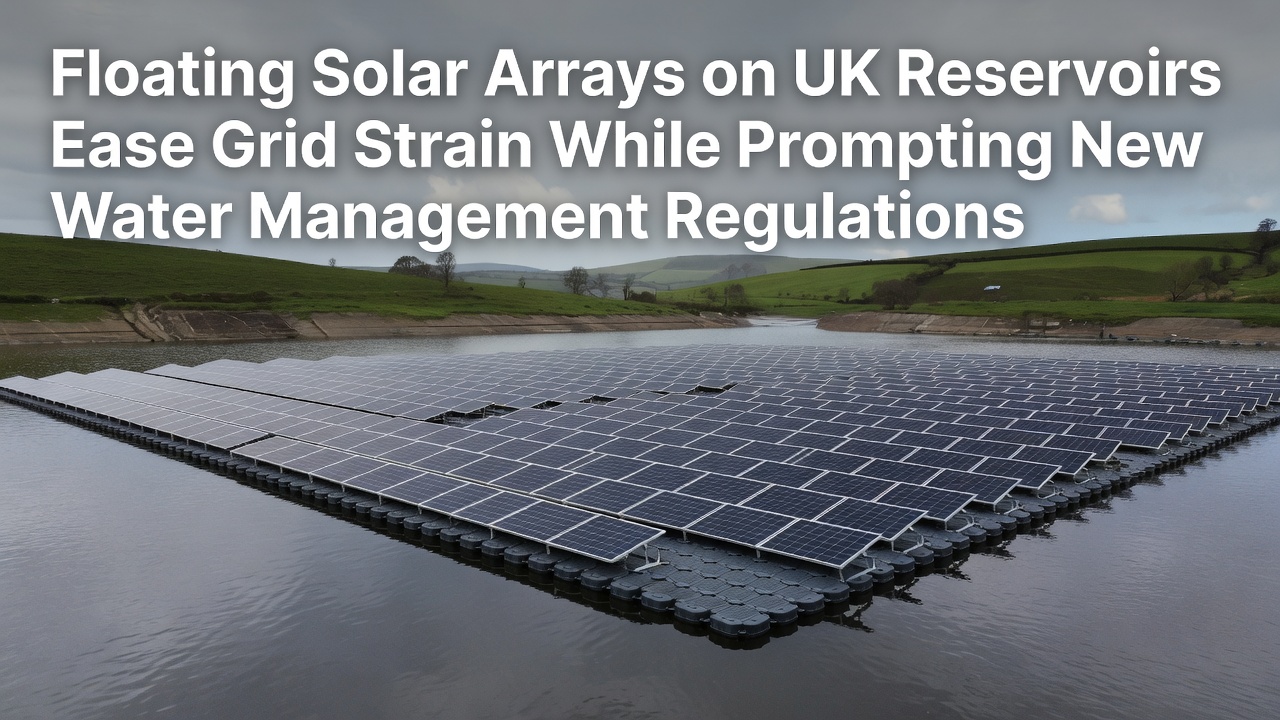
Reservoirs across the United Kingdom have become sites for floating solar arrays that generate electricity while resting on water surfaces, and these installations connect directly to the national grid to reduce pressure during peak demand periods. Data from energy distribution networks shows that such systems feed power into local substations, which helps balance supply when wind and land-based solar output fluctuates. Researchers at several universities have documented how the arrays cover portions of reservoir surfaces without disrupting water storage functions, yet the scale of deployment has drawn attention from regulatory bodies responsible for water quality and usage.
Grid Integration and Capacity Benefits
Energy analysts track output from floating installations that came online in recent years, and figures indicate these arrays contribute measurable megawatts during daylight hours. Grid operators report lower instances of imported power from distant plants when reservoir-based solar operates at full capacity, which occurs because the systems sit close to demand centers in southern and central England. Studies from the Department for Energy Security and Net Zero outline how floating arrays achieve higher capacity factors than some ground-mounted equivalents, since cooler water temperatures beneath the panels improve panel efficiency throughout the summer months.
Transmission data reveals that several reservoirs now host arrays spanning multiple hectares, and these projects link to existing 33kV and 132kV lines without requiring extensive new cabling. One installation in the Midlands supplies enough daytime power to serve thousands of households, while another in the North West demonstrates consistent performance even during variable weather patterns. Observers note that the combination of water and solar reduces land-use conflicts that often arise with terrestrial renewable projects, which allows planners to focus resources on grid reinforcement rather than site acquisition.
Emerging Water Management Regulations
Water companies and environmental agencies have responded to the growth of floating arrays by drafting updated guidelines that address evaporation rates, water temperature changes, and maintenance access. These rules require operators to monitor dissolved oxygen levels and aquatic ecosystems beneath the panels, since reduced sunlight penetration can alter algae growth patterns. In September 2026, the Environment Agency plans to introduce standardized permitting procedures that mandate annual inspections of anchoring systems and cable routing to prevent leaks or structural failures that could affect reservoir integrity.
International examples inform the new framework, and a report from the Australian Renewable Energy Agency highlights best practices for floating solar on drinking water supplies. UK regulators have adapted elements of that guidance to require minimum distances between arrays and intake points, while also setting thresholds for panel coverage to preserve natural light for biological processes. Those who've studied similar installations in Canada point out that careful spacing prevents ice damage during winter, and British water authorities now incorporate those findings into design standards for northern reservoirs.
Technical and Environmental Considerations
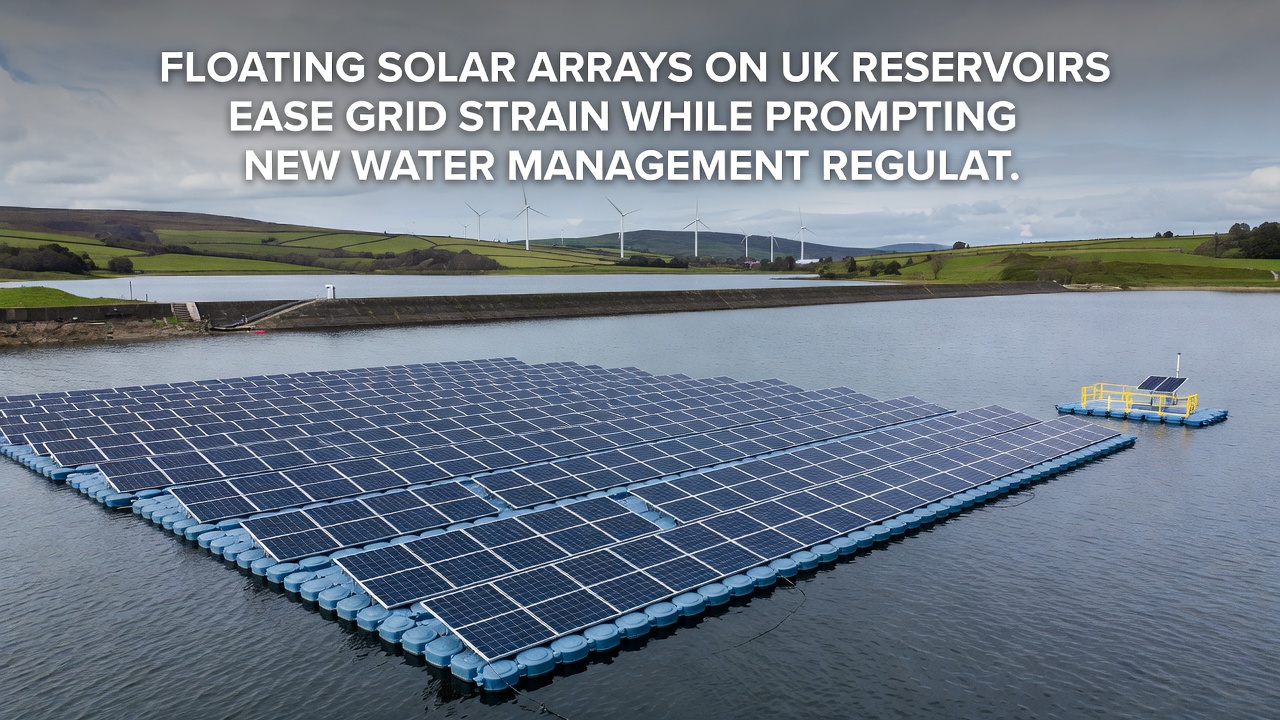
Engineers design the floating platforms with modular pontoons that adjust to changing water levels, and this flexibility ensures the arrays remain operational across seasonal variations. Materials chosen for the structures resist corrosion from prolonged water exposure, while inverters housed on shore connect the generated direct current to alternating current suitable for grid use. Maintenance crews access the panels via small boats or walkways, and operators schedule cleaning cycles to remove bird droppings and pollen that accumulate on the surfaces.
Environmental assessments examine impacts on fish populations and bird habitats, because large floating structures can create new resting spots yet also shade feeding areas. Data collected over multiple seasons shows mixed effects depending on reservoir depth and surrounding vegetation, which prompts site-specific studies before approval. Regulators now require biodiversity action plans as part of every application, and these plans include monitoring protocols that continue throughout the operational life of each array.
Future Deployment Patterns
Current project pipelines include several additional reservoirs identified for floating solar, and planning applications continue to arrive from energy developers seeking suitable water bodies. Government targets for renewable capacity encourage this expansion, while the new water regulations aim to balance energy goals with resource protection. Observers expect further refinement of permitting processes after the September 2026 updates take effect, particularly around cumulative effects when multiple arrays occupy the same catchment area.
Industry groups collaborate with academic institutions to refine modeling tools that predict both energy yield and water quality outcomes, and these tools help streamline future approvals. The approach combines real-time sensor data with historical reservoir records, which produces more accurate forecasts for both grid planners and water managers. Those involved in the sector continue to share findings across regions to improve standards and reduce duplication of research efforts.
Conclusion
Floating solar arrays on UK reservoirs demonstrate a practical method for expanding renewable generation while utilizing existing water infrastructure. The technology eases grid strain through localized power production, yet it also drives the creation of targeted water management regulations that safeguard environmental quality. As installations grow in number and the September 2026 rules come into force, coordination between energy and water sectors remains essential for sustained operation.