Rosa Butler · 31 October 2026
Britain's Solar Expansion Highlights Persistent Shortfalls in Installer Certification Pipelines
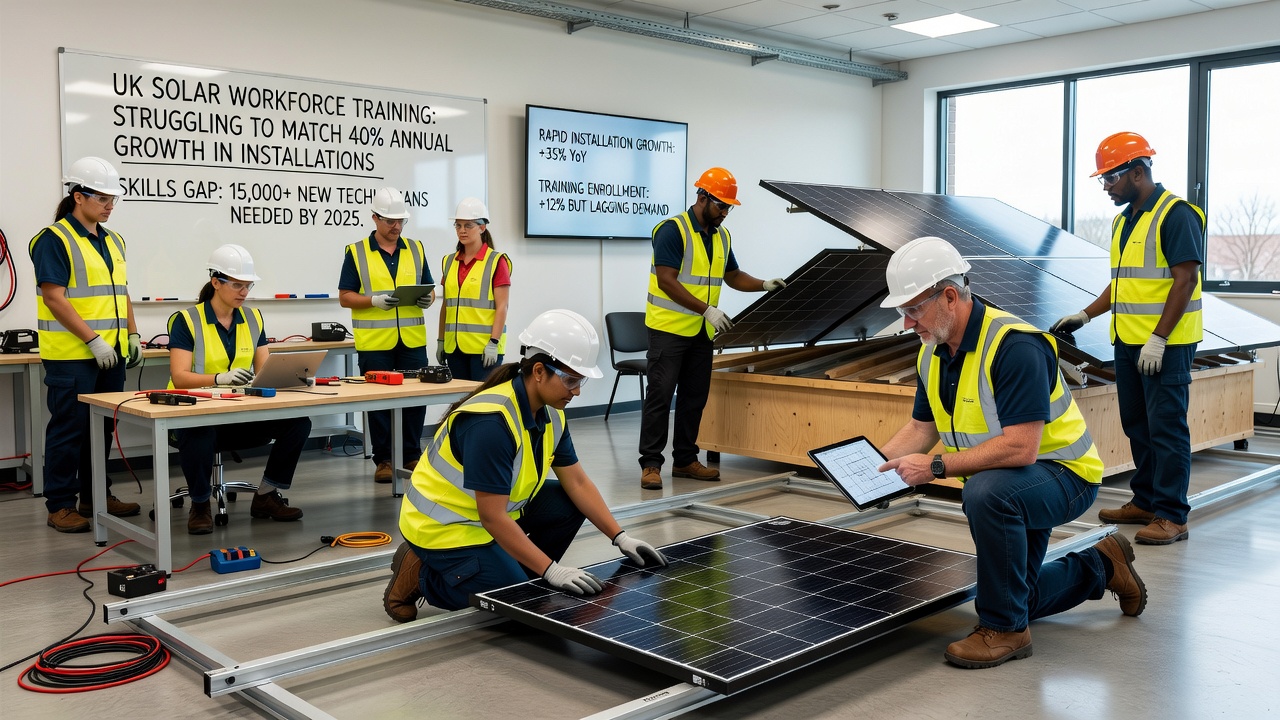
Data from industry monitors show UK solar capacity additions accelerated sharply through 2025 and into 2026, yet enrollment figures in accredited training schemes have risen only modestly over the same period. Government statistics indicate more than 2.8 gigawatts of new solar came online during 2025 alone, while MCS-certified installer numbers grew by roughly nine percent. Observers note this mismatch leaves project timelines vulnerable when demand spikes coincide with seasonal weather windows.
Installation Growth Metrics and Regional Patterns
Records compiled by trade associations reveal utility-scale projects accounted for the largest share of added capacity, followed closely by commercial rooftop systems in England and Wales. Scotland and Northern Ireland recorded smaller absolute gains yet posted faster percentage increases in smaller arrays under 5 megawatts. Analysts tracking planning applications report over 14 gigawatts of proposals still awaiting consent as of early October 2026, suggesting the pipeline will remain robust for several years.
Existing Training Infrastructure and Certification Routes
Approved centres deliver City & Guilds and EAL qualifications that cover electrical, mechanical, and roof-safety modules required for MCS accreditation. Most programmes run between four and twelve weeks and combine classroom theory with practical assessments on live rooftops. Funding streams include teh Adult Skills Fund and employer levy contributions, although uptake varies by region. Several further-education colleges in the Midlands and North East have expanded cohorts since 2024, while southern providers report waiting lists exceeding six months.
Industry bodies have introduced shorter upskilling pathways for electricians already holding 18th-edition wiring credentials. These conversion courses focus on PV-specific design software, inverter commissioning, and battery storage integration. Completion rates remain high, yet total annual graduates from all routes combined still fall short of annual installation demand estimates published by the Solar Energy Association.
Supply-Demand Imbalance and Reported Impacts
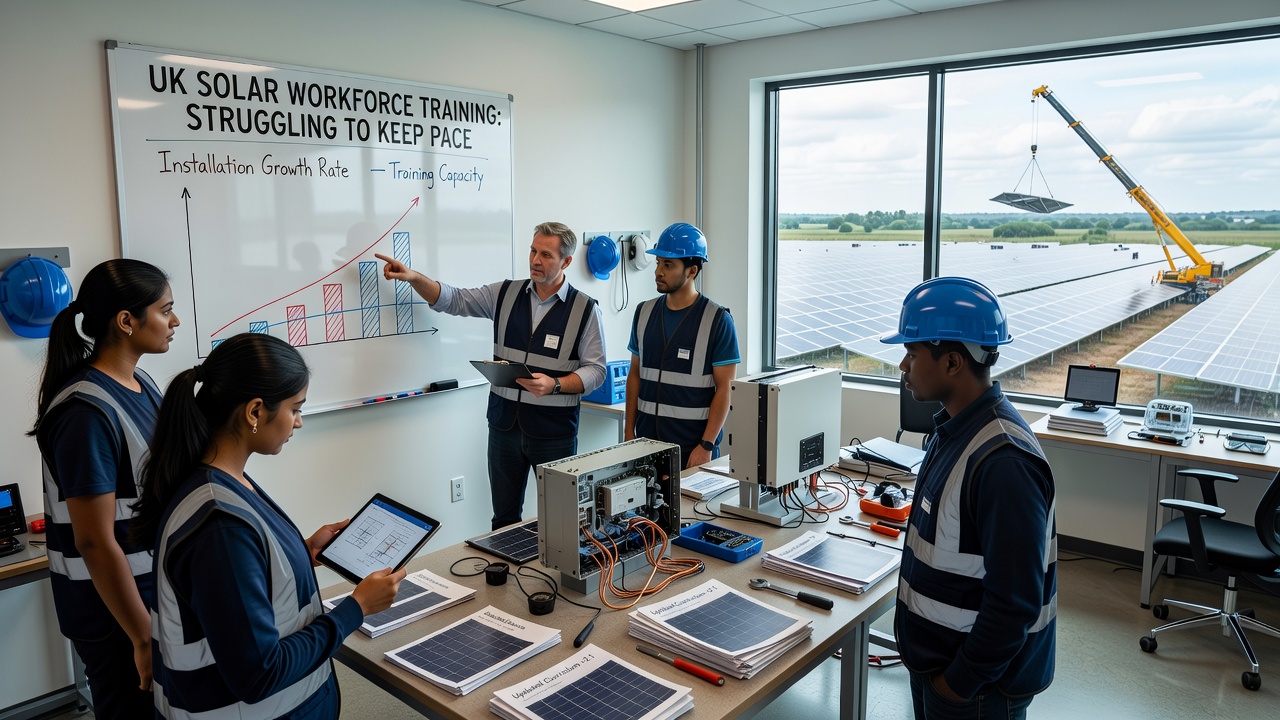
Contractors interviewed for sector surveys describe difficulty filling crews for simultaneous commercial and residential jobs, particularly in rural counties where travel time adds further constraints. Some firms report turning away work or extending lead times by three to five months. Data from the Office for National Statistics show solar-related vacancies posted on job boards increased 37 percent year-on-year through September 2026. Wage inflation in certified installer roles has followed, with median salaries rising faster than the broader construction sector average.
Training providers cite instructor shortages and limited access to demonstration rooftops as bottlenecks that cap cohort sizes. Several centres have begun partnerships with equipment manufacturers to borrow hardware for practical sessions, yet capital funding for permanent facilities remains limited outside major urban areas.
International Comparisons and Policy Responses
Reports from the International Renewable Energy Agency highlight similar training lags in other European markets during rapid deployment phases, while Australian workforce studies document successful use of mobile training units that rotate between regional sites. UK policymakers have referenced these models when considering expanded apprenticeship incentives and portable grant schemes. A pilot programme launched in the North West in spring 2026 offers employer reimbursements for release time during the first three months of new-hire training, with early figures showing modest uptake.
Academic researchers at several UK universities are examining retention rates among newly certified installers, noting that a portion move into related roles in electric vehicle charging or heat-pump installation within two years. These mobility patterns reduce net availability for solar-specific projects even when certification numbers appear adequate on paper.
Conclusion
Current figures indicate UK solar installations continue to outpace the supply of newly qualified personnel despite incremental growth in training places. Regional disparities in course availability, instructor capacity, and employer release time remain the primary constraints cited by stakeholders. Ongoing adjustments to funding mechanisms and qualification pathways may narrow the gap, yet evidence from October 2026 shows the imbalance persists and continues to influence project scheduling across the sector.